
VINELink in St. Louis County
Minnesota VINE covers county-jail custody statewide, and St. Louis County can be selected inside VINELink. The state runs it. It is free and anonymous, available around the clock all year. Search by name, partial name, or offender ID. A result may show current status, the facility, booking information, and a scheduled release date when one exists. VINE is not the DOC locator. Minnesota Haven handles state-prison custody and its release notifications. Federal sentenced custody belongs in the Bureau of Prisons locator, while other federal or immigration custody may need the responsible federal agency. The official Minnesota VINE page identifies the state program and its VINELink route.
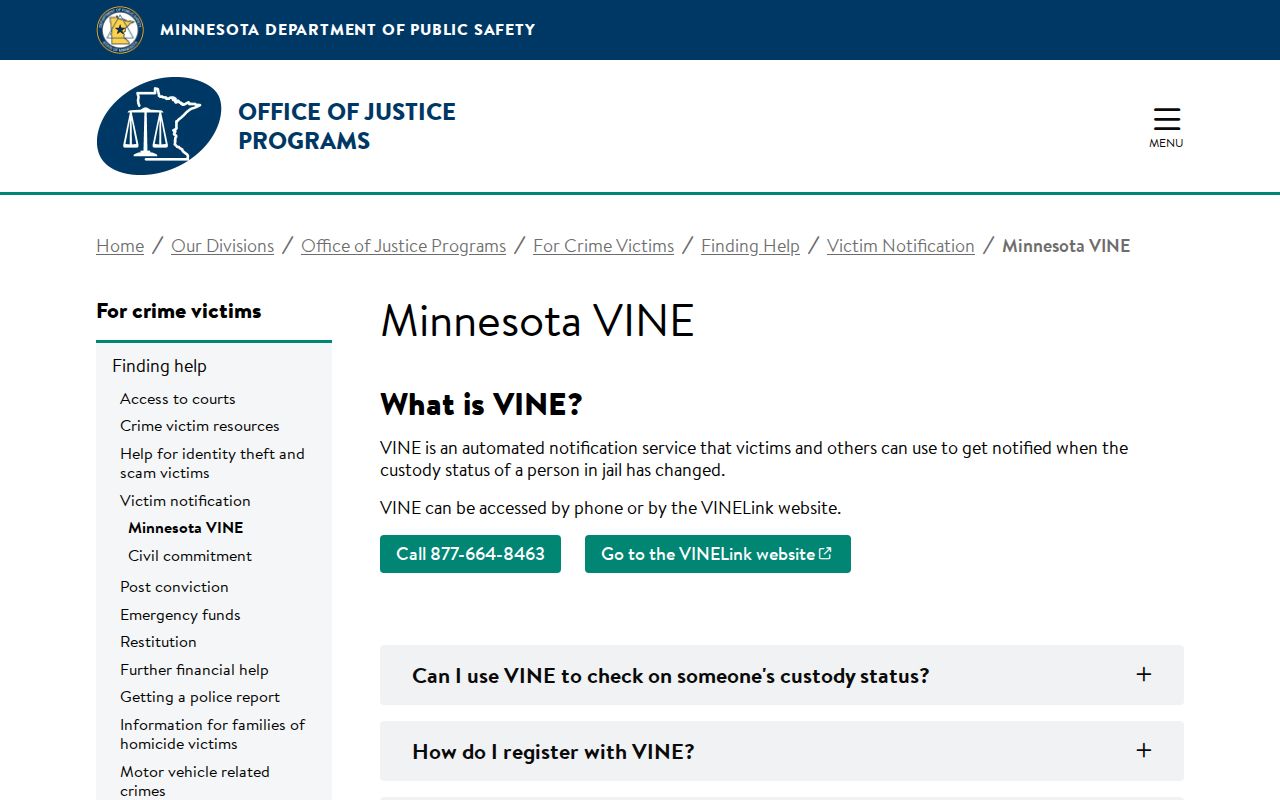
The official state page shows Minnesota VINE is a state-run service, not a St. Louis County Sheriff app.
Check a St. Louis Arrest
Use enough identifiers to avoid grabbing the wrong person.
- Open VINELink and choose Minnesota.
- Select St. Louis County when the interface asks for a county.
- Search by full or partial name, or use the offender ID when known.
- Compare the facility and booking information with the official county roster.
- Open the matching record and read the current status before registering for alerts.
A blank result has several causes. Intake may still be in progress. A transfer, a release, or another custody system can also explain it, and the county recent-arrests hub covers the roster and records-request path. Pick Minnesota and begin a person-specific check at the VINELink search interface.
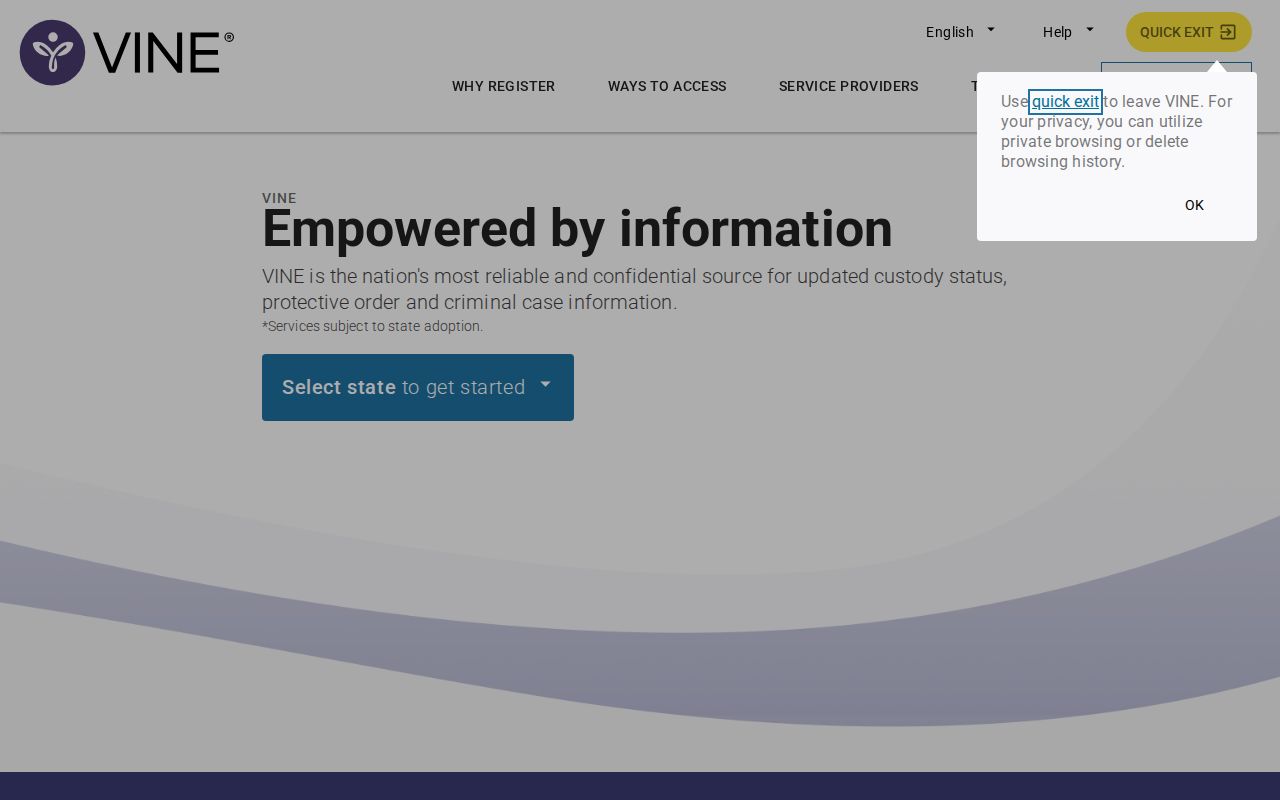
The blank search state avoids displaying or republishing a person’s booking photograph.
St. Louis VINELink Result Fields
VINE summarizes custody. It does not replace the police report or court disposition.
| Result item | Meaning |
|---|---|
| Name or offender ID | Identifiers used to distinguish possible matches. |
| Custody status | The status supplied to VINE by the participating jail system. |
| Facility | The reported holding location, which may change after transfer. |
| Booking information | Available county-jail intake details, not a complete incident narrative. |
| Scheduled release | A date or detail only when supplied and subject to change. |
| Notification options | Available phone, email, or text registration channels. |
Charges listed at booking are simply what the jail recorded when the person was admitted. The court file tells the rest of that story.
Register St. Louis Custody Alerts
Alerts follow the matched record only. Pick channels you can watch safely, and keep the phone PIN private.
- Select the notification or registration option on the matching record.
- Choose phone, email, or text when offered.
- Enter the requested contact details and follow the confirmation prompts.
- Create and retain the confidential PIN for phone registration.
- Use that PIN to manage or cancel alerts later.
State materials list release, transfer, escape, and death among the possible events. Follow the live prompts, since phone alerts may repeat until your PIN confirms receipt.
Verify St. Louis VINELink Results
The VINE fact sheet says county-jail data refreshes on a set cycle. That cycle often runs every 15 or 30 minutes. That pace applies to VINE alone. The county roster PDF runs hourly, the county says. Intake can also come before a booking number. So a fresh arrest may not appear right away. Confirm new arrests with the jail at 218-726-2345. The Daily Arrest Report workflow is the other quick check. State custody goes through the DOC public viewer and Minnesota Haven. Federal custody needs the right federal locator. An alert helps. But never build a safety plan on it alone in an emergency.
VINE Is Not a Sheriff App
The Sheriff's office lists no public booking app. Sheriff social posts carry announcements, not a full booking source. Minnesota VINE works on mobile. Yet it stays a state custody-notification program. The Minnesota DOC notification page shows the separate state-prison path.
That split matters once sentencing moves a person from county jail into DOC custody.
St. Louis Custody Alert Events
A release alert reports a custody change. It says nothing about the case. Release can follow bail, a court order, or a completed term. It can also follow transfer to another authority or another lawful change. A transfer notice only means the reported facility changed. It does not show dropped charges or entry into state prison. Alerts can fail, too. A changed number, a filtered inbox, or a slow carrier can each swallow a message. Keep contact details current, and use the PIN when the phone service prompts you. Registration is confidential, the state says. Never share the PIN, since it controls the whole registration. For an urgent safety concern, call emergency services instead of waiting on an automated alert. For a hearing or deadline, check the official court record. VINE gives custody notice only. It is not legal advice or scheduling.
Resolve Multiple VINELink Matches
A partial-name search can pull up several people. Compare what the result gives you. Check the facility plus the offender or booking identifier against the St. Louis County roster. Look-alike names alone never tie someone to an arrest. If the roster and VINELink disagree, note the time of each check. The roster updates hourly, while VINE follows its own cycle from the fact sheet. A transfer or release can hit one system first. Call the facility for present custody, and use the Sheriff records unit or the originating agency for the underlying arrest record.
Minnesota VINE Phone Access
VINE also works by phone in Minnesota at 877-664-8463. Calls run in English, Spanish, Hmong, and Somali. A live operator can add other languages. Registration works the same way as online. You sign up with a phone number and a PIN. It is a solid backup whenever web access is limited. Menus change, so listen to the current prompts. Before calling the jail with a follow-up question, jot down the facility name. Also record the person's identifier. Custody status shifts fast, so skip relying on what you heard on an earlier call.
Track a St. Louis Transfer
St. Louis County notes that transfers between jails can happen to ease crowding. They are not punishment. So a new facility showing up in VINELink may simply reflect routine movement of a person in custody. Read the current facility field. Keep the offender or booking identifier handy, and call the receiving jail when you need direct answers.
A move into Minnesota DOC hands is another matter. After sentencing, the DOC public viewer can lag several business days. A new person may not appear right away. Minnesota Haven runs the separate prison notification service. County VINE was never meant to serve as a state-prison locator.
The county jail holds some U.S. Marshals prisoners too. A local facility result alone won't tell you whether the case is state or federal. When county and DOC searches both clash with the facts you have, sort out which authority is responsible. Do that before picking a federal locator. Each system answers one narrow custody question, and none delivers the final court disposition on its own.
Compare VINELink and the Roster
VINELink and the county roster cover overlapping ground, yet they serve different jobs. The roster shows the county's current booking snapshot. It can include charges, bail, location, order type, projected release, and a booking image. VINE sticks to custody status, facility details, and alerts. Expecting it to copy every roster field will only frustrate you.
Match the tool to the question. Use the roster to inspect a county booking entry. Use VINE to watch a listed custody change. Use the Release Roster for the county's 48-hour release report, and the court system for the case outcome. That order keeps a notification from being mistaken for a full arrest record.
When you compare sources, note both the date and the time. A status can shift between checks. A stale result does not mean either system lost the record for good. It just means direct confirmation is due.
Keep VINE Registration Private
The state treats VINE registration as confidential. Pick a phone or email account the intended recipient controls. Guard the phone PIN. A shared device can leak an alert through its lock screen or call history, so choose channels with the user's safety in mind. Searching, meanwhile, only locates a custody record supplied by a participating jail.
Registration stays optional. Anyone can search without creating an alert, then register after confirming the right match. If the service lists more than one matching name, hold off. Confirm the facility and identifiers against the official county source first.