
St. Louis County Arrest Log
St. Louis County publishes no weekly booking blotter. The Sheriff's current roster works as a custody snapshot instead. A separate 48-hour report covers releases. Neither lists every arrest made in a chosen week. A good arrest log separates its sources. Custody comes from the roster, while departures come from the release report. Duluth Police releases, Hibbing CivicAlerts, and Hermantown announcements add selective narratives about recent arrests. Deeper booking history belongs in a Sheriff data request, since news alone cannot capture every arrest in St. Louis County.
Read St. Louis County Records
Match the source to the event and its date. Paging backward blindly distorts a St. Louis County arrest timeline.
- Check the current county roster for people still held.
- Read the 48-hour Release Roster for a recent release.
- Review official city police notices for a named incident, while noting that those feeds are selective.
- Use the booking number, date, and arresting agency to check the court trail.
- Request a defined date range from the Sheriff when the live reports have rolled forward.
For a fresh booking, start with the Daily Arrest Report. When reconstructing a full week, save the date you viewed each live PDF, because those files keep changing.
St. Louis Arrest Record Fields
The official roster supplies the core booking fields.
| Field | Use and limit |
|---|---|
| Name and booking number | Identity and request keys; match with care. |
| Booking date and time | Jail processing time, not always the arrest time. |
| Arresting agency | Points to the office that may hold the incident report. |
| Charge and offense level | Accusations as booked, not final findings. |
| Location, bail, order type | Time-sensitive custody details. |
| Projected release | A projection that can change. |
| Release date or status | Belongs to the release report, not a booking blotter. |
A booking photo may appear in the current PDF. The county does not guarantee a photo on every arrest record, and juvenile or active-investigation limits can also restrict access.
Weekend St. Louis Arrest Reports
The county says the roster refreshes hourly. No separate weekend or holiday schedule exists. No fixed interval separates booking from posting either. A weekend arrest in St. Louis County may sit unseen until a booking number is assigned. A short stay can work the other way. The person may drop off the roster and resurface only in the release report. A Monday news notice does not date the arrest itself, so read the article date, event date, and booking time separately. When timing truly matters, ask the agency for the arrest report or the Sheriff for the booking record.
St. Louis Arrest Log Archives
The official PDF is a living document. It is not a dated St. Louis County archive. For a past range, the Sheriff public-data channel is the official route. State archive schedules describe jail registers and daily activity logs, but they do not prove which series this county adopted or transferred, so confirm retention locally. Two unofficial leads exist. SLCJailRoster.com says its coverage starts April 2, 2026, and JailRosters.org offers a date index. Both need confirmation against county records. The unofficial SLC Jail Roster archive shows its search and filter interface.
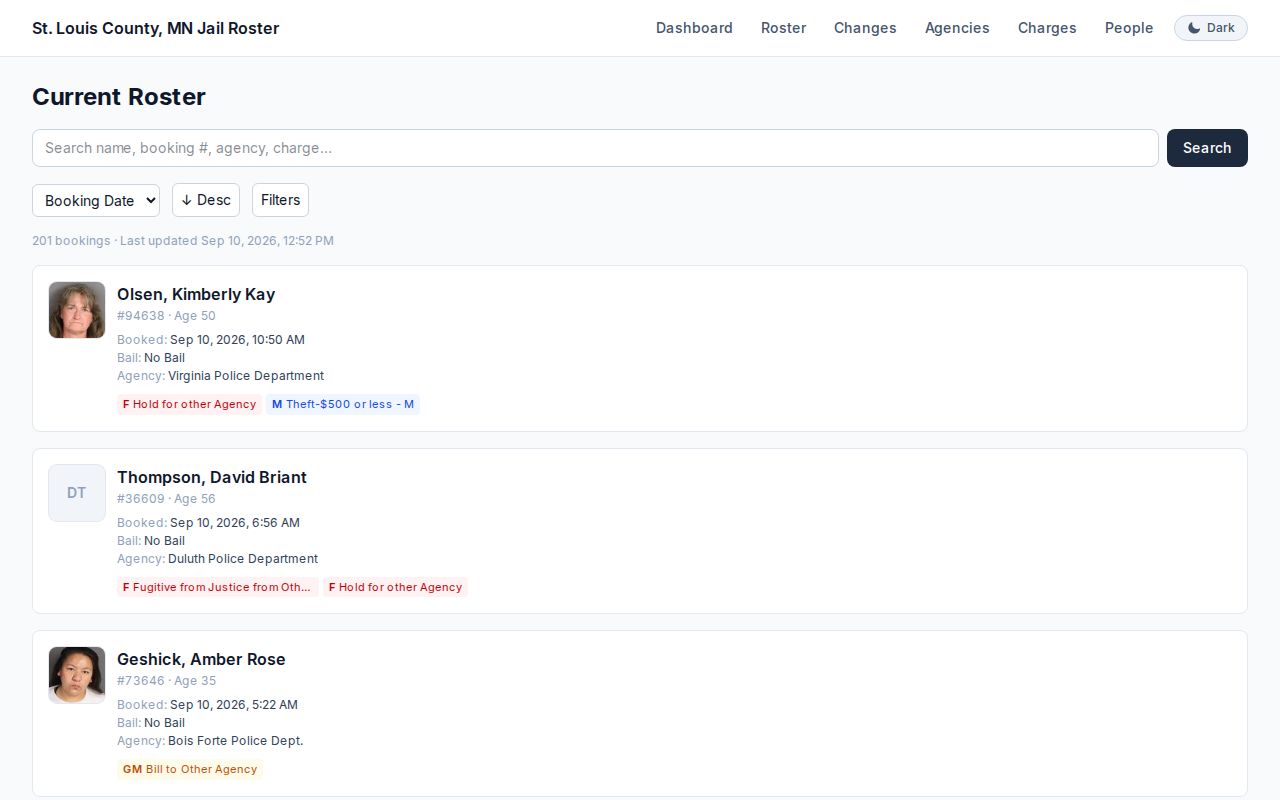
It only points to a possible date. The county's official request stays the final word on an arrest record.
St. Louis Arrest News Layer
Northern News Now Crime, WDIO's Duluth archive, and the Duluth News Tribune run selective crime stories. Duluth Police press releases offer official narratives. Hibbing CivicAlerts and Hermantown Community Highlights are official channels too, but none is a booking roster. The Duluth Police release archive shows it.
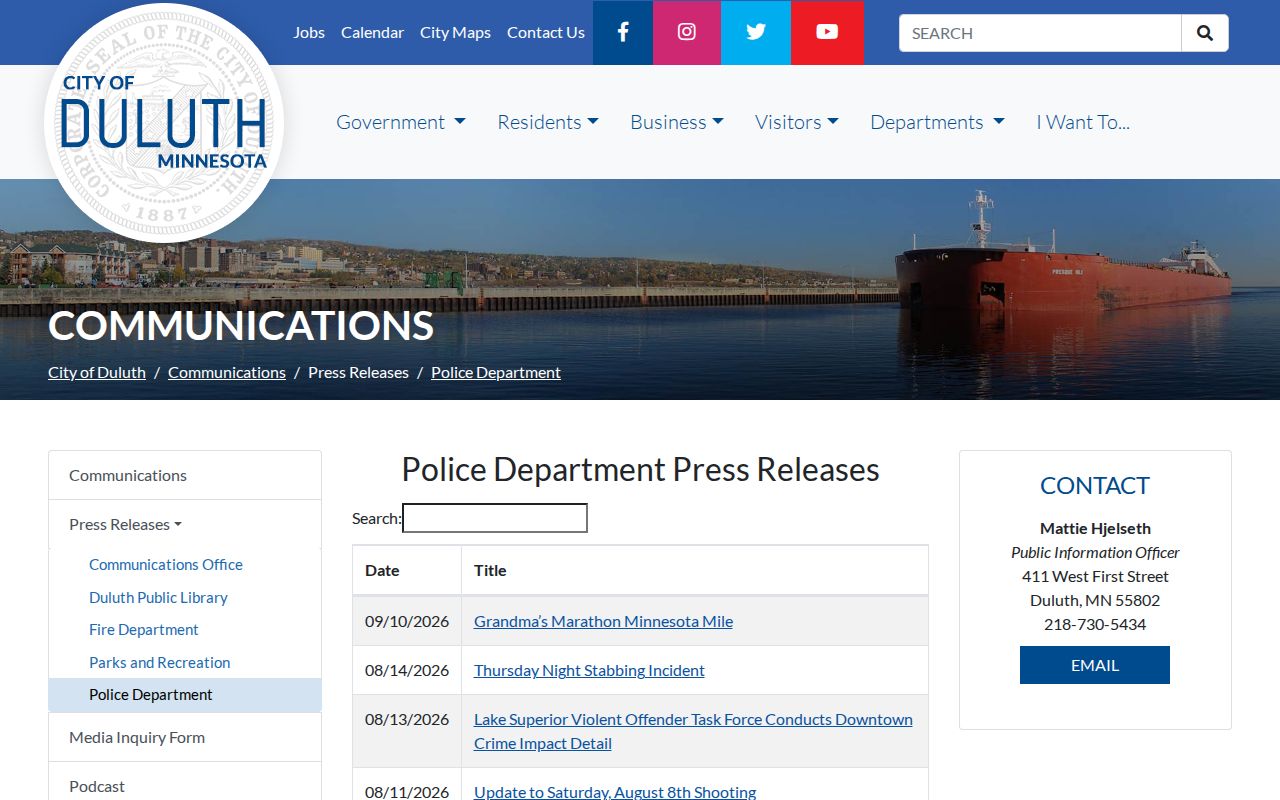
Read each item for its own dates. An article's event and publication dates do not make it a full county arrest log, and the WDIO Duluth crime archive offers a secondary local-news view.
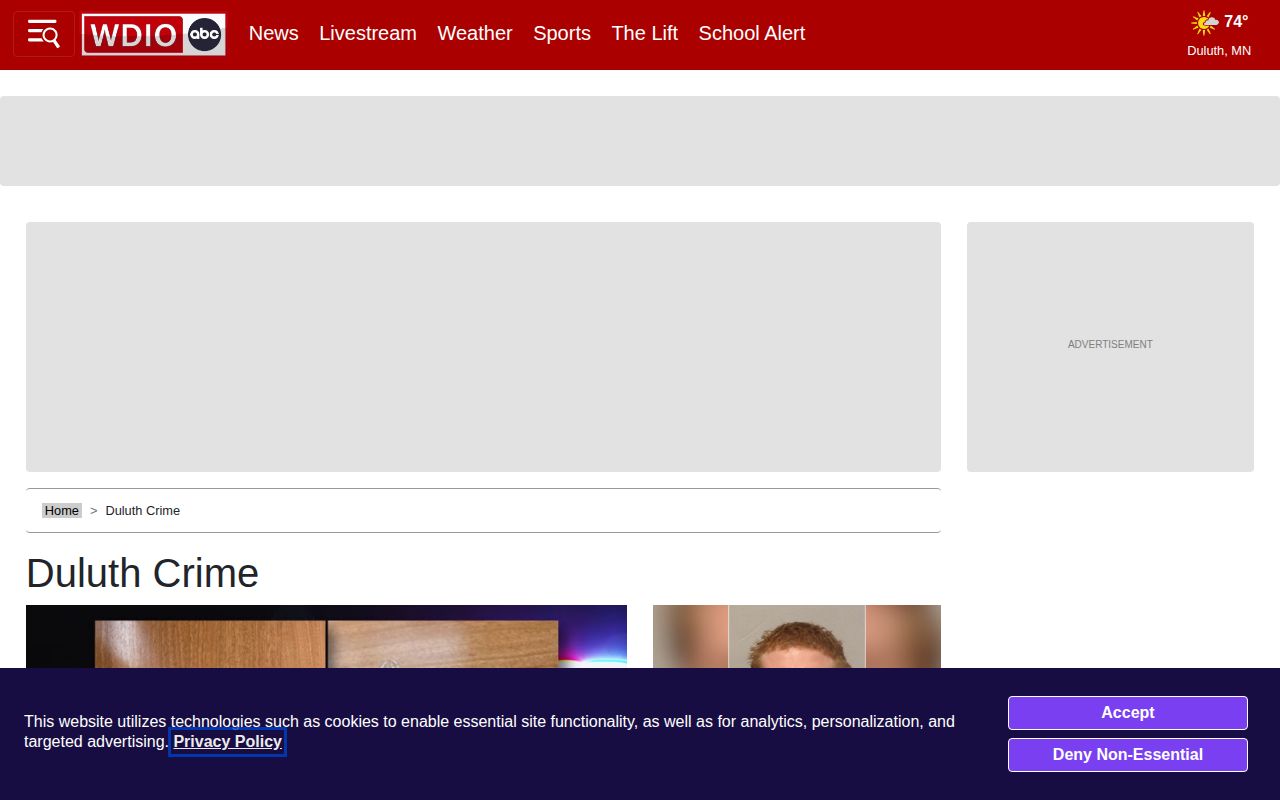
Stories get updated, so verify custody through official records.
Request a Dated Arrest Log
A public-data request is the official route once a week drops off the live PDF. Start with clear dates. Give the week's start and end. Include the person's full name, booking number, and arresting agency whenever you have them. Say what form you want. Inspection, an electronic copy, or paper are different answers. The county form promises only a reasonable time, not a fixed turnaround. Agencies split records too. The arresting agency holds the incident narrative, while the Sheriff keeps the county booking entry and photo. Duluth, Hibbing, and Hermantown police keep separate channels. Ask for the exact record type. A police report, jail roster entry, release record, and court file are not one document. Minnesota law generally makes adult arrest data public, though active-investigation and juvenile limits can apply. Withheld portions should cite the governing basis. Only the court file can show whether a case ended in dismissal, acquittal, plea, or conviction.
Compare St. Louis Log Sources
Each log source answers a different question. The roster shows who is in custody right now. The release report covers a short departure window. Police notices only carry what an agency chose to announce. News coverage reflects an editor's judgment about what matters. Secondary archives may hold older snapshots. Still, their dates, filters, and copied facts deserve a second check before you rely on them.
For every entry, note the publisher, report type, event date, publication or retrieval date, and the direct link. That habit keeps a later article date from masquerading as an arrest date, keeps a release record from being counted as a new arrest, and gives the originating office enough detail to pull the right record.
Follow St. Louis Arrest Cases
A weekly source list stops at custody. The court record picks the story up from there. Minnesota Court Records Online helps. The courts themselves warn that its public search is not complete, so plan around the gaps. Pending criminal cases may stay hidden in a defendant-name search until a conviction lands.
When a name search fails, try a known case number or citation. Court terminals work too. Court administration can also answer questions by phone or in person. St. Louis County District Court sits in Duluth, Hibbing, and Virginia. Case questions go to court contacts. Custody questions go to the jail.
In any rebuilt St. Louis County log, record a disposition as its own later event, with its own source and date, separate from the booking entry.
Photos in St. Louis Arrest Logs
Booking photos appear in some St. Louis County logs. The current roster PDF can render thumbnails. The official sources promise no permanent weekly photo archive, though. A booking image simply shows the person the jail processed. Missing an image you need? Ask the Sheriff records unit for the agency-held photograph and name the format you want. Active-investigation and juvenile limits can apply. News photos may come from police, family, or video, so keep the outlet's stated credit and never pass one off as the county booking image.
Build a Reliable Arrest Timeline
Start every timeline with the event date. The day you found a record is not the day it happened. Add the booking or arrest time from the official record. Add the release time if the report gives one. Note the date of any police notice. Log the retrieval time for each changing PDF. These dates can differ without contradicting each other, because each one marks a different step.
The booking number is the strongest county identifier. Pair it with the arresting agency and date of birth only when the official source supplies both and identity needs resolving. Never merge two people over a shared name. If fields conflict, keep each version and ask the originating office to clarify. Once a case number exists, track court events as a separate track. A later dismissal or conviction should never be backdated into the booking entry.
Why Arrest Entries Roll Off
The current roster only reflects current custody. Release someone, and that person vanishes from the snapshot. Transfer has the same effect. The 48-hour Release Roster may briefly preserve the departure, but it rolls forward too. Neither live document works as a permanent archive.
That roll-off is why an older St. Louis County arrest calls for a dated records request rather than another reload of the live pages. An old entry can still live in agency systems, a court file, a retention schedule, or an archival transfer. State Archives guidance is only a lead. St. Louis County may have adopted its own schedule, so confirm retention with the county before assuming anything archival.